
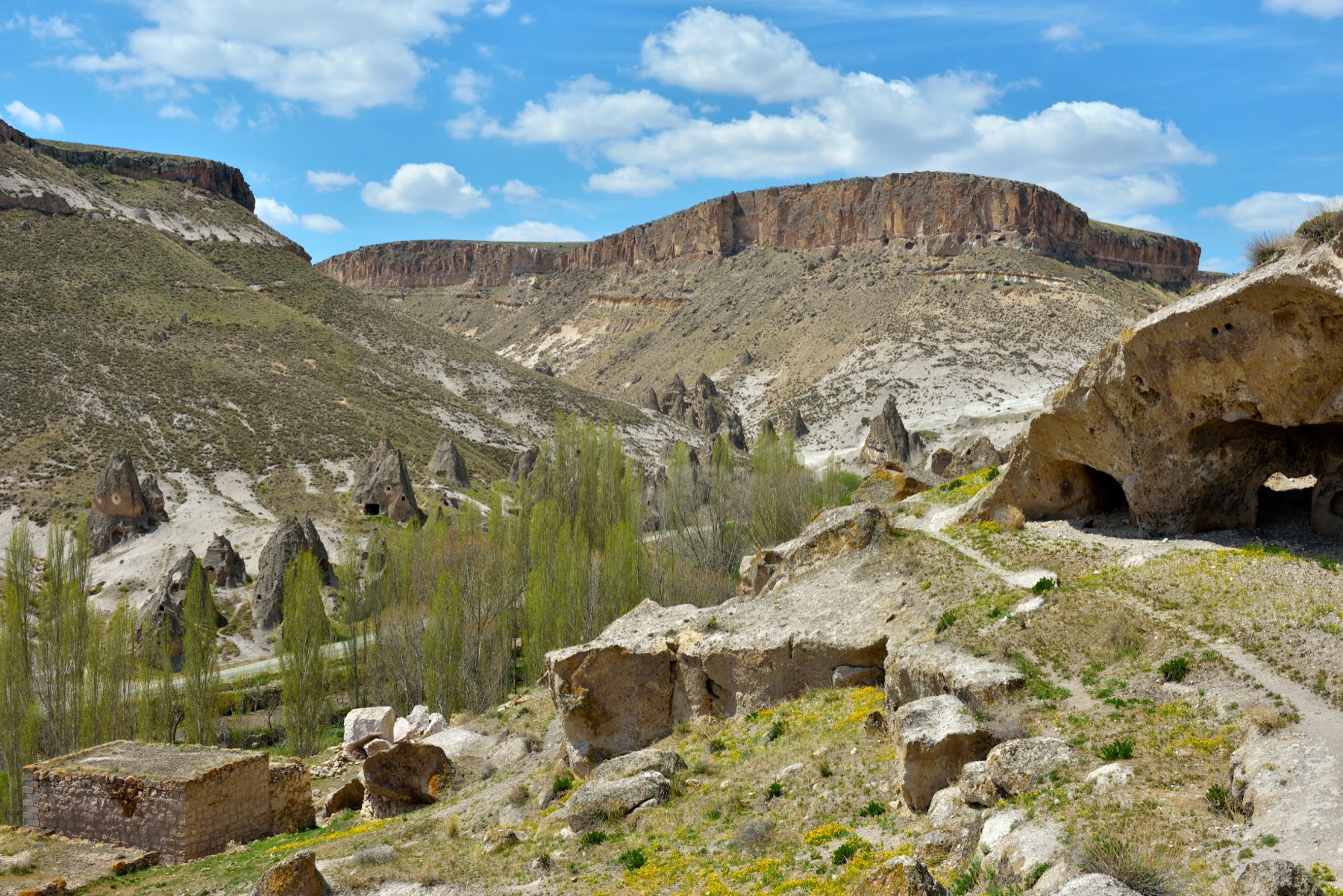
The best way to see Soğanlı is to resist reducing it to a single view. From a distance, the tuff cliffs and lines of the slopes dominate. On foot, carved doorways, small openings and village homes add human stories to the landscape. Natural formations and traces of changing daily life share the same ground.
Soğanlı is both a living settlement in Kayseri's Yeşilhisar district and an archaeological site. Churches and caves stand near homes still used today. This guide follows the valley from its rock formations and painted churches to dovecotes, local craft and the changing morning light.
A valley shaped by stone
Soğanlı's appearance is tied to Cappadocia's volcanic tuff. Over time, erosion shaped the region's valleys, rocky outcrops and fairy chimneys. The relatively soft rock also allowed people to carve spaces into it. Nature and architecture therefore appear as parts of the same landscape.
An opening in a slope may point to a history of burial, worship or shelter. Rock-cut surfaces, open sky, dry hillsides and signs of settlement often fit into one view. The valley's appeal lies in this whole setting, as much as in any single monument.
Life carved into stone
According to the Turkish Ministry of Culture and Tourism's site guide, Soğanlı has been used as a settlement since the Roman period. Some spaces carved into the slopes served as tombs in Roman times and as churches in the Byzantine era. The same rock was adapted to very different needs across centuries.
From the fourth century, Soğanlı was one of the centres of Christian life in Cappadocia and remained significant in the seventh and eighth centuries. The style of its church paintings is dated in the official guide to the tenth through twelfth centuries. These dates help explain why the valley's visible fabric developed over a long period rather than in one building campaign.